We share a proven approach to make pancakes that rise tall and taste rich, ready for busy mornings or relaxed weekends.
Our method lists exact ingredients up front: 1½ cups all-purpose flour, 2½ teaspoons aluminum-free baking powder, ½ teaspoon salt, and 1 tablespoon sugar for the dry mix. For the wet mix we use 1¼ cups milk, 1 egg, 3 tablespoons melted butter, and an optional 2 teaspoons vanilla.
Heat a nonstick griddle to 300–350°F or a pan over medium to medium-high. Portion about ¼ cup batter per cake, flip when bubbles form and edges look defined, cook ~2 minutes first side and ~1 minute after flipping.
We emphasize aluminum-free baking powder to avoid metallic notes and ensure reliable lift. Keep early batches warm at 200°F and freeze leftovers up to 3 months; reheat in the microwave or toaster.
Key Takeaways
- Simple ingredient ratios give consistent results every time.
- Use aluminum-free baking powder to avoid off flavors and get steady rise.
- Portion batter and watch bubbles to know when to flip for even cooking.
- Keep batches warm or freeze for quick breakfasts later.
- Toppings like butter, maple syrup, and fresh fruit finish the stack.
Why Our Fluffy Pancake Recipe Works Right Now
A few contemporary upgrades — better leavening and precise heat — change everything for morning stacks. We focused on one simple swap: use aluminum-free baking powder so the batter never develops a metallic or salty aftertaste when you use two teaspoons or more.
The present-time upgrades: aluminum-free baking powder and heat control
Start over medium, then lower to medium-low as the pan builds residual warmth. This prevents outsides from darkening before the centers cook through.
Electric griddles set to 300–350°F give reliable coverage at scale. Flip when bubbles pop and edges turn matte; a golden underside confirms the right moment.
What we aim for: tall lift, tender middle, golden edges
- Clean leavening: aluminum-free powder lets the butter, milk, and flour shine without off notes.
- Controlled heat: manage timing so the middle cooks without burning the side.
- Batter balance: calibrated milk-to-flour ratio supports height and moisture without tunneling.
We watch each batch and adjust heat in real time so your pancakes stay consistent from the first to the last, and common mistakes—like overmixing or pressing after the flip—won’t rob you of lift.
Key Ingredients for Fluffy Pancakes
Start by sorting ingredients into dry and wet groups so measuring is fast and reliable.
Dry components
We combine 1½ cups all-purpose flour, 2½ teaspoons aluminum-free baking powder, ½ teaspoon salt, and 1 tablespoon sugar in a large bowl.
For accuracy, spoon and level the flour into the cup before measuring. This keeps the batter balanced for lift and tenderness.
Aluminum-free baking powder prevents a metallic aftertaste while giving steady rise. If a formula calls for baking soda or self-rising flour, adjust leaveners accordingly.
Wet components
In a separate bowl we whisk 1¼ cups milk (dairy or non-dairy), 1 egg, 3 tablespoons melted butter, and optional 2 teaspoons vanilla.
The milk level keeps the batter pourable without spreading too thin. The egg binds and strengthens the crumb.
Fold the wet mix into the dry just until moistened to preserve tenderness and reliable rise.
- Measure with cups and tablespoons for repeatable results.
- Evenly dissolve sugar and salt in the dry mix to control browning.
- Keep liquid-to-dry ratios steady so pancakes cook through without turning gummy.
Equipment and Setup for Consistent Results
The gear you choose dictates how many pancakes you cook and how evenly they brown. We favor a nonstick griddle when we need batch efficiency, since it lets us cook twice as many at once with steady, even heat.
Nonstick griddle vs. pan: capacity, temperature, and ease
Griddles give wide surface area and consistent heat across cups of batter, which speeds cooking and reduces turn time. An electric griddle set to 300–350°F is ideal.
Pans work well for small batches or limited space. Use medium heat and watch for color; reduce as the surface warms to avoid over-browning.
Measuring 1/4–1/3 cup batter for even pancakes
Grease only after the surface is hot, adding a bit of butter or oil just before pouring. Portion about 1/4 to 1/3 cup batter per cake to standardize size and thickness.
- Cook about 1–2 minutes per side depending on heat and thickness.
- Use a light hand with the spatula—don’t press—to keep height and a tender crumb.
- Stage batches on a cooling rack or in a 200°F oven to maintain texture while you finish cooking the rest.
Fluffy Pancake Recipe
We follow a simple mixing order that keeps the batter airy and the crumb tender. Start by whisking dry and wet components separately, then combine just until moistened to preserve lift and texture.
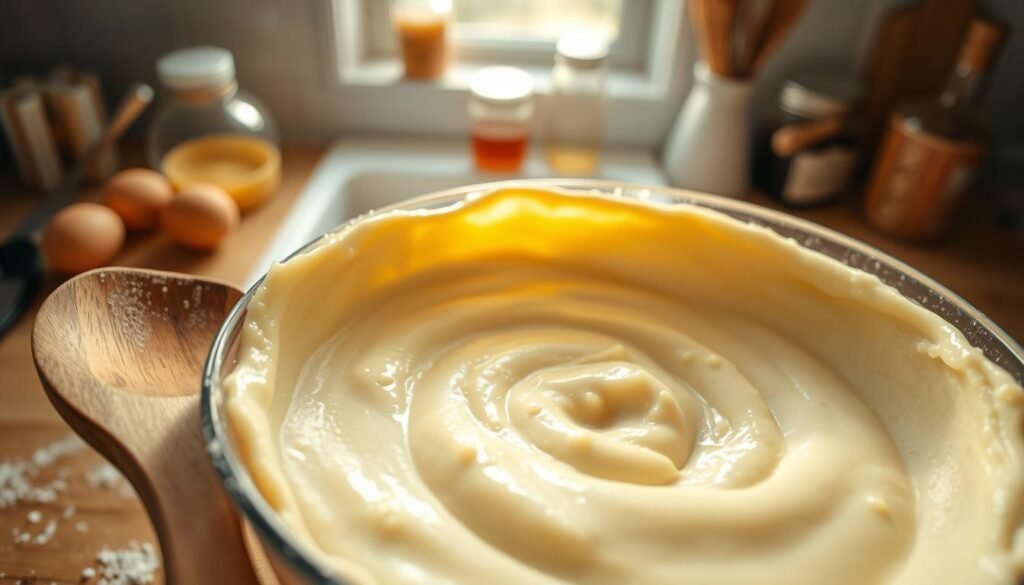
Mixing method: whisk dry, whisk wet, then combine
In one bowl sift or whisk 1½ cups flour, 2½ teaspoons aluminum-free baking powder, ½ teaspoon salt, and 1 tablespoon sugar. In another bowl whisk 1¼ cups milk, 1 egg, and 3 tablespoons melted butter.
Fold the wet into the dry until just combined. A few lumps are fine; overmixing will tighten gluten and deflate the batter.
Griddle temp and timing
Heat a nonstick griddle to 300–350°F. Grease only when the surface is hot and pour about a ¼ cup batter for each cake.
Cook ~2 minutes until matte edges form and bubbles appear, then flip and cook about 1 minute more on the other side.
Avoid overmixing and pressing—keep the crumb light
Flip only once and never press with the spatula. Pressing compresses the interior and forces raw batter to the edge, ruining height and mouthfeel.
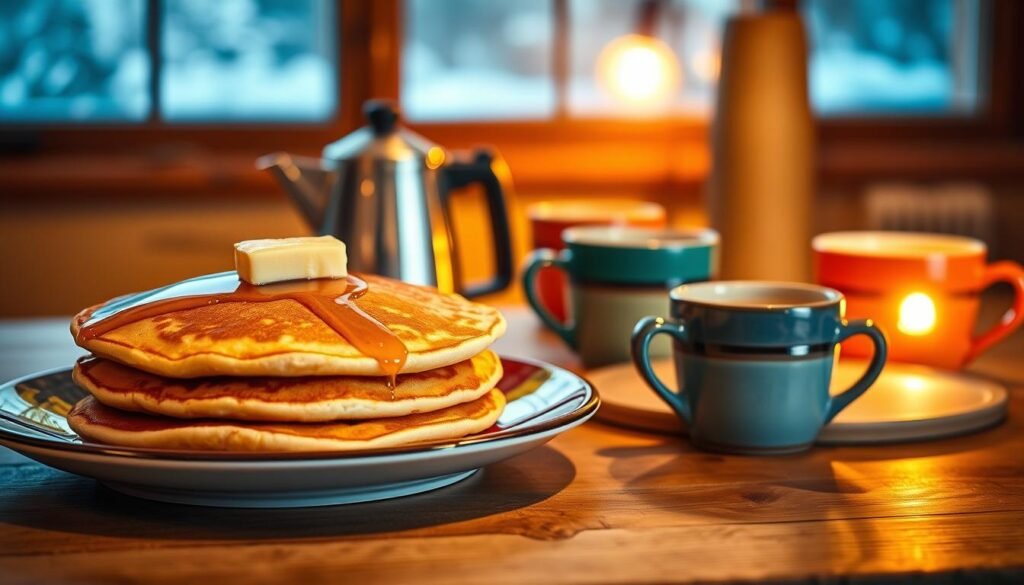
Serve immediately or hold in a warm oven and finish with butter and maple syrup.
Pro Tips to Keep Pancakes Tall and Tender
Simple timing and tiny technique changes yield taller stacks with softer centers. We focus on practical moves you can repeat every time so results stay consistent.
Aluminum-free baking powder to prevent metallic or salty taste
We use aluminum-free baking powder when the formula needs two teaspoons or more. This keeps the flavor clean and preserves rise without an off note. A small dash of baking soda can add lift for some formulas, but only if you accept its flavor impact.
Batter thickness and rest time for optimal lift
Let the batter rest a few minutes so the flour hydrates and the mix thickens naturally. This short time often solves thin-batter problems and supports taller rise without adding flour.
Adjusting heat as the pan builds residual warmth
Start on medium, then lower to medium-low as the pan heats. Watch for the batter sheen to fade and edges to set—those visual cues guide our timing more than a clock.
We grease sparingly with butter or oil just before pouring and keep mixing light to protect the delicate structure that creates fluffy pancakes batch after batch.
Quick checklist:
- Aluminum-free powder for clean taste.
- Rest batter a few minutes; avoid overmixing.
- Reduce heat as the griddle accumulates warmth.
- Consider buttermilk for a tangy alternative.
Troubleshooting: From Runny Batter to Undercooked Middles
Troubles with thin batter or undercooked centers are usually solved with short rests and tiny corrections. We start with the least invasive fix before changing ingredients.
If the batter seems runny, let it sit 5 minutes so the flour can hydrate. Often that alone firms the mix enough to pour cleanly.
If it is still too thin, add 1 tablespoon flour at a time, waiting a couple of minutes between additions. This prevents overshooting thickness and keeps texture tender.
Cold batter on a hot surface
Do not pour refrigerated batter onto a very hot griddle or pan. Let it sit about 20 minutes to warm slightly.
Cold batter on a hot surface causes browned outsides and a raw middle every time.
When to flip and small leavener swaps
Flip when bubbles pop, edges turn matte, and the underside is golden. Cook about 1–2 minutes per side depending on thickness and surface heat.
- Quick checklist: rest runny batter first; add flour by tablespoon only after waiting.
- Warm refrigerated batter ~20 minutes before cooking on the griddle.
- Use small amounts of baking soda for lift, but expect a flavor change; with self-rising flour, cut added baking powder accordingly.
- Measure salt in the dry mix to avoid isolated salty bites and stir minimally when correcting the batter.
- Test one pancake first to confirm milk balance, thickness, and timing.
Variations, Toppings, and Serving Ideas
Small changes in mix-ins and toppings let you turn a standard breakfast into something memorable. We keep prep simple so service stays fast and plates look like diner-style favorites.
Mix-ins
We fold up to 1 cup of fresh fruit, like diced strawberries or blueberries, into the finished batter. Fold gently to avoid streaking and to keep distribution even.
For extra pockets of flavor, add up to ½ cup chocolate chips. Less is more—too many mix-ins can weaken the structure and slow cooking.
Classic pairings
Serve hot pancakes with a pat of butter and warm maple syrup. For a brighter plate, swap in strawberry or blueberry compotes.
We recommend testing one pancake first when using juicy fruit so you can confirm cook time and avoid underdone centers.
Buttermilk and dairy-free options
Choose buttermilk when you want a tangy, ultra-tender crumb; reduce the liquid slightly and tweak leavening if needed.
For dairy-free swaps, use a neutral oil or plant-based butter plus your preferred non-dairy milk. These options brown reliably and keep morning service simple.
- Fold fruit at the end to protect lift.
- Cap chocolate chips to maintain structure.
- Portion uniformly so mix-ins cook evenly and don’t scorch.
- Keep toppings simple for fast, consistent service.
Make-Ahead, Keep-Warm, and Freezer Strategy
Smart holding, chilling, and freezing techniques save time without sacrificing texture. We outline a simple flow so pancakes stay moist and ready for a busy morning.
Holding in the oven: Spread finished pancakes in a single layer on a baking sheet and tent with foil. Hold at 200°F to keep warm while you finish cooking the rest.
Timing matters: Use a thermometer and track minutes so stacks don’t dry out during holding.
Refrigerating batter vs. freezing cooked stacks
Refrigerate batter overnight only when needed. Let it sit 20 minutes at room temperature before cooking so the outside won’t brown too fast while the center stays raw.
To freeze cooked pancakes, cool them on a sheet in a single layer, then transfer to a labeled freezer bag and seal. Store up to three months.
- Reheat in the microwave 30–60 seconds or use a toaster to restore crisp edges.
- Make a double batch on the weekend to simplify morning cooking during the week.
- Label each bag with date and flavor so rotation is easy.
Note: Aluminum-free powder in rested batter keeps lift consistent after refrigeration when you bring the mix back toward room temperature.
More Comfort Classics to Try Next
If you want a set-and-forget dinner that still tastes homemade, try our slow-cooker chicken and dumplings.
We outline three easy paths so you can pick what fits tonight: a crockpot classic, a stripped-down 4-ingredient version, and a bold biscuit twist that ups the flavor.
Best Chicken and Dumplings (Crockpot) — set-and-forget cozy dinner
Our crockpot recipe simmers chicken, stock, and aromatics all day so the dumplings cook tender without fuss.
Start in the morning, let it go, and finish with a quick shred and seasoning check before serving.
4-Ingredient Chicken and Dumplings — fast weeknight winner
We trim the list to four pantry-friendly ingredients to cut prep and keep the comfort intact.
This version is ideal when time is short but you still want a homey, satisfying meal.
Secret twist: Red Lobster biscuits for extra flavor and fluffy dumplings
For a savory upgrade, swap standard biscuit dough with a Red Lobster–style biscuit mix.
The herbed mix adds richness and an herb-forward note that makes the dumplings taste restaurant-level without extra work.
- We recommend the crockpot method for an effortless, cozy dinner that simmers while you handle the day.
- The 4-ingredient option is our go-to when we need speed but still want comfort.
- Try the Red Lobster biscuit swap to infuse herbs and a tender crumb into dumplings.
- Keep staples on hand: cooked chicken, chicken stock, biscuit mix, frozen veg, and salt.
- Finish hot dumplings with a dab of butter for a glossy, satisfying touch.
These recipes live in the same post ecosystem so you can jump from pancakes in the morning to a hearty dinner in seconds.
Yield and timing notes: crockpot serves 6 and cooks 6–8 hours low; 4-ingredient serves 4 and takes 30–40 minutes.
“Set it, forget it, and come back to dinner that feels like home.”
Conclusion
Memorize the ratios and visual cues, and you can make breakfast that’s repeatable and fast.
We lock a dependable fluffy pancake recipe into simple actions: measure 1½ cups all-purpose flour, 2½ teaspoons baking powder, ½ teaspoon salt, 1 tablespoon sugar, then mix wet and dry ingredients separately (1¼ cups milk, 1 egg, 3 tablespoons melted butter) and combine just until moistened.
Use aluminum-free baking powder, portion about a ¼ cup batter, flip when bubbles pop and edges go matte, and hold early batches at 200°F. Serve with butter and maple syrup or fresh toppings, freeze extras, and reheat 30–60 seconds for fast mornings.
Test one pancake first to dial in time and heat, and check our chicken and dumplings options for dinner planning.