
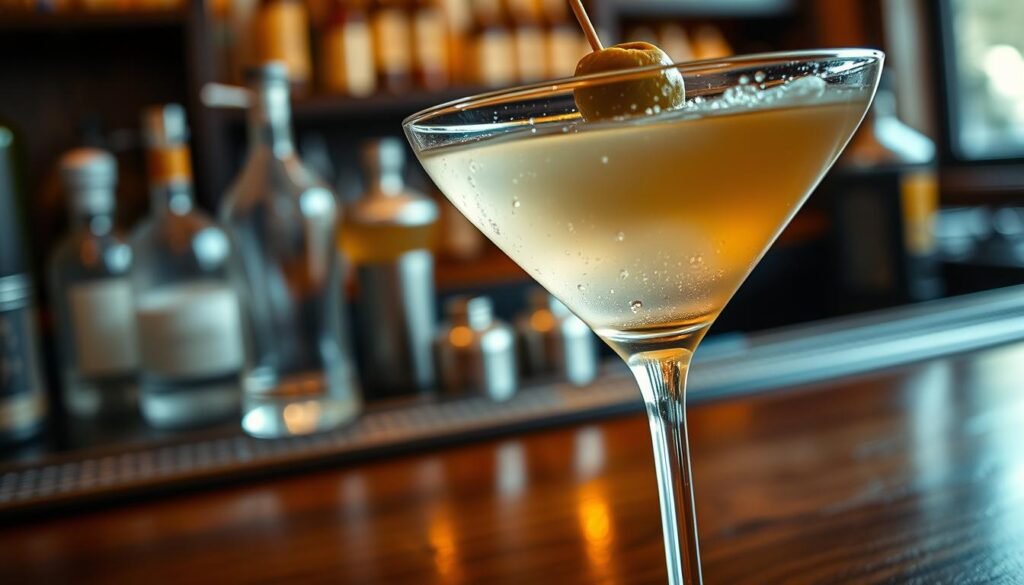
We show you how to make a bar-quality classic in minutes. This intro pulls together history, technique, and a proven build so you can replicate an iconic drink at home.
The original blend paired gin or vodka with dry vermouth and olive brine, a twist credited to New York barkeep John O’Connor around 1901. Later, it earned fans in high places and became a household standard.
Our tested ratios—2½ oz spirit, ½ oz vermouth, ½ oz olive brine—focus on an olive-forward balance served icy in a chilled glass. We recommend shaking to integrate the brine and chill the drink quickly, or stirring for a clearer, silkier pour.
Key Takeaways
- We give a clear martini recipe that yields bar-level results at home.
- Shaking blends dense brine with spirit and adds controlled dilution.
- Choose gin for botanical depth or vodka for a cleaner olive note.
- Start with 2½ oz spirit, ½ oz vermouth, ½ oz olive brine and adjust.
- Serve in a properly chilled glass with three olives for a classic finish.
Why Our Dirty Martini Stands Out: Flavor, Balance, and Bar-Proven Ratios
We dialed the ratios to highlight savory depth while keeping the spirit crisp and drinkable.
The role of olive brine: boosting savory depth and body
Brine works like salt in cooking: a measured splash lifts sweet and savory notes in vermouth and tames bitterness.
Olive oils in the brine add body and mouthfeel so you don’t need extra vermouth to feel weight on the palate.
Gin vs. vodka: choosing the spirit for your preferred olive-forward profile
Vodka keeps the olive center stage for a cleaner, olive-forward profile. Gin layers juniper and botanicals that mingle with brine for added complexity.
We recommend the shaken 2½ oz spirit, ½ oz dry vermouth, and ½ oz brine as a starting way to get a cold, integrated drink. Adjust brine in ¼-ounce steps to fine-tune salinity and balance.
- Taste brines from different jars—salt levels vary and change how much splash you need.
- Store vermouth refrigerated to protect aroma when you prefer a slightly wetter build.
- Pairing tip: try our Chicken and Dumplings with a Red Lobster biscuit twist for a buttery, savory match.
Dirty Martini Recipe Ingredients and Tools We Trust
We keep the bar lean: a clear set of ingredients and a few reliable tools make every pour repeatable. Start with measured ounces and a clean workspace so you can taste and adjust.
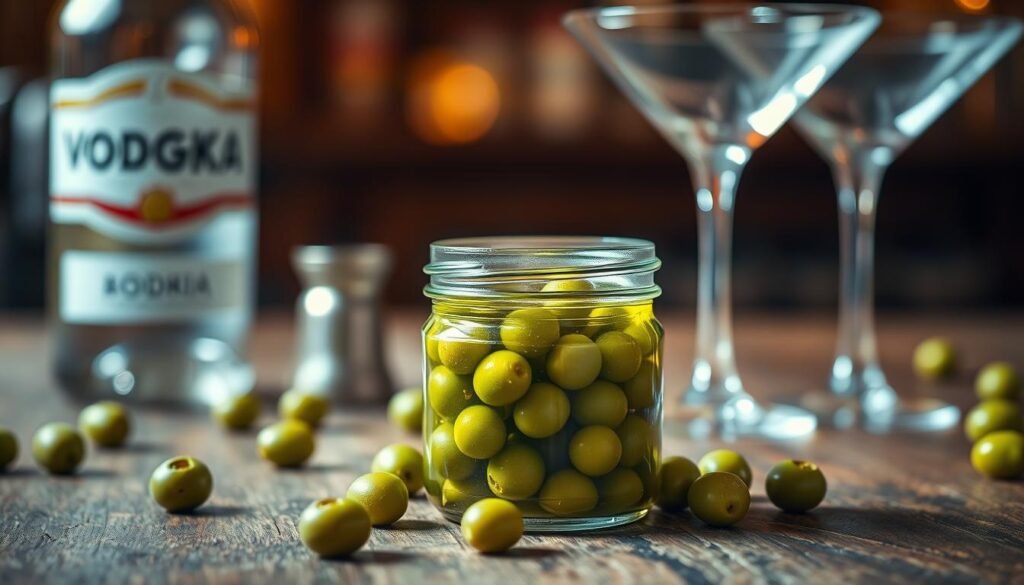
Base spirit: choose vodka (Grey Goose, Belvedere for splurge; Tito’s or Kirkland for value) when you want the olive to shine, or pick a dry gin for botanical depth. Both work; we prefer vodka when brine is king.
Dry vermouth: use or skip
We use 1/2 ounce dry vermouth as a starting point. Refrigerate after opening. If you want a stronger olive focus, omit vermouth and add extra brine in 1/4-ounce steps.
Olive brine vs. olive juice
Jar brine from olives gives more body and bold olive flavor than many bottled juice products. Save money by using brine from a jar of olive pieces—flavor payoff is high.
Ice, tools, and a chilled glass
Use dense ice, a jigger for precise ounces, an all-metal shaker or solid mixing glass, and a fine strainer for shaking. Chill the martini glass by filling it with ice and cold water for about 10 minutes before service.
After stocking your bar, grab our Chicken and Dumplings links and try the Red Lobster biscuit twist to round out a simple menu pairing.
Step-by-Step dirty martini recipe: Shaken for Integration or Stirred for Silkiness
This section walks through two mixing approaches so you can choose colder integration or a silkier texture.
Shaken method: colder, integrated, slightly more dilution
We prep the martini glass first by packing it with ice and cold water for about 10 minutes. Dump the ice just before straining.
Measure precisely with a jigger: 2 1/2 ounces gin or vodka, 1/2 ounce vermouth, 1/2 ounce olive brine. Add to a shaker with fresh ice and shake hard 15–20 seconds until the metal feels frosty.
Double strain into the chilled martini glass to remove shards and keep the drink cold.
Stirred method: cleaner texture with controlled dilution
Use a mixing glass with plenty of ice and stir about 20 seconds. This yields a clearer texture and tighter dilution.
Straining, garnishing with olives, and optimal serving temperature
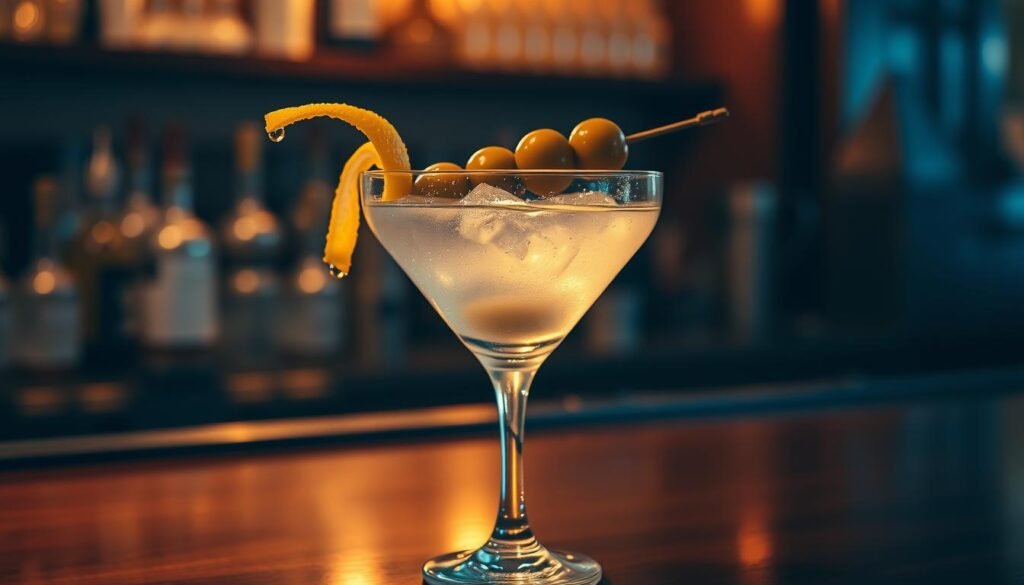
Garnish with three firm olives on a skewer and serve immediately. Aim for very cold service; colder temps emphasize savory notes without flattening the flavor.
| Step | Action | Timing / Ounces |
|---|---|---|
| Prep glass | Chill with ice & cold water | ~10 minutes |
| Measure | Use a jigger for consistency | 2½ oz spirit, ½ oz vermouth, ½ oz brine |
| Shake | Integrate brine and chill | 15–20 sec; double strain |
| Stir | Clear texture, controlled dilution | ~20 sec in mixing glass |
| Finish | Garnish and serve | 3 olives; serve very cold |
Smart Variations: Wet, Dry, and the “Secret Twist” with Alternative Brines
A few measured changes will teach you how to make a wetter, drier, or more savory take that still feels balanced.
Wet vs. dry: adjusting vermouth for weight and aroma
Wet builds increase dry vermouth to add body and scent. A true wet martini uses equal parts gin and dry vermouth for a softer, aromatic profile.
We keep vermouth chilled so the extra weight reads bright, not flat.
Extra-briny options: dialing up brine without losing balance
Start by adding one extra 1/4-ounce splash of brine. Taste before adding more.
If you want maximum savory impact, replace 1/2 ounce vermouth with brine, but do this only after testing smaller changes.
The twist: pickle or caper brine for a savory riff
Pickle or caper brine brings lively, tangy notes that pair well with vodka for a clean, salt-forward profile.
Avoid kalamata or black olive brines if you want the classic green-olive character; they can shift the overall flavor too far from expectations.
| Variation | Template | Best spirit | Garnish |
|---|---|---|---|
| Dry | 2½ oz spirit, ¼ oz vermouth, ½ oz brine | Vodka | Firm green olives |
| Wet (stirred) | 1½ oz gin, 1½ oz dry vermouth, ¾ oz brine | Gin | Manzanilla olives |
| Extra-briny | 2½ oz spirit, 0–½ oz vermouth, ¾–1 oz brine | Vodka | Caper berries |
| Pickle/caper twist | 2½ oz spirit, ½ oz vermouth, ½ oz pickle or caper brine | Vodka or gin | Pickle spear or caper berry |
We recommend changing only one element at a time so you can track what improved the drink. Try a wet stirred template, then test an alternate brine. For a savory pairing, explore our Chicken and Dumplings options and add Red Lobster biscuits as a buttery secret twist.
Pro Tips for Bar-Quality Results at Home
A few focused habits—right ice, consistent shaking or stirring, neat garnishes—lift home drinks to bar standard. We outline the practical steps that give you reliable, repeatable service.
Glass chilling, ice quality, and managing dilution
Chill the martini glass with ice and cold water for about 10 minutes. Dump it just before pouring so the first sips stay crisp.
Use dense, large cubes to chill quickly and control dilution. Shake 15–20 seconds for deep chill and integration; double strain to remove chips. Stir about 20 seconds in a mixing glass for a silkier pour with less aeration.
Olive selection and skewers: presentation and flavor
Choose olives for both flavor and look. Manzanilla gives classic brine; Castelvetrano adds buttery notes. Skewer three olives for balanced garnish and tidy serving.
We prefer jar brine from green olives for stronger olive character. Prep small bowls of garnishes and have skewers ready so your drinks hit the table cold and polished.
| Focus | Action | Why it matters |
|---|---|---|
| Glass | Chill 10 minutes | Keeps drink cold through first sips |
| Ice | Use dense cubes; control dilution | Faster chill, cleaner flavor |
| Mixing | Shake 15–20s or stir ~20s | Choose integration vs. silkiness |
| Garnish | 3 olives on skewer; jar brine | Flavor, presentation, cost-effective upgrade |
Hosting a full evening? Pair your drinks with our Chicken and Dumplings—crockpot or 4-ingredient—and add the Red Lobster biscuit twist for a can’t-miss side.
Conclusion
Wrap up with a clear plan: measure 2½ ounces gin or vodka, ½ ounce dry vermouth, and ½ ounce olive brine. Shake 15–20 seconds for a colder, integrated pour or stir ~20 seconds for silkier texture and strain into a chilled glass.
We prefer jar-sourced brine for bolder olive flavor. Use vodka to let brine lead or gin to add botanical layers. Keep vermouth refrigerated and measure in small steps as you adjust.
Garnish with three olives and serve immediately. Before you go, bookmark our Chicken and Dumplings guides—the crockpot and 4-ingredient versions—and try the Red Lobster biscuit twist for extra buttery depth alongside your cocktails.