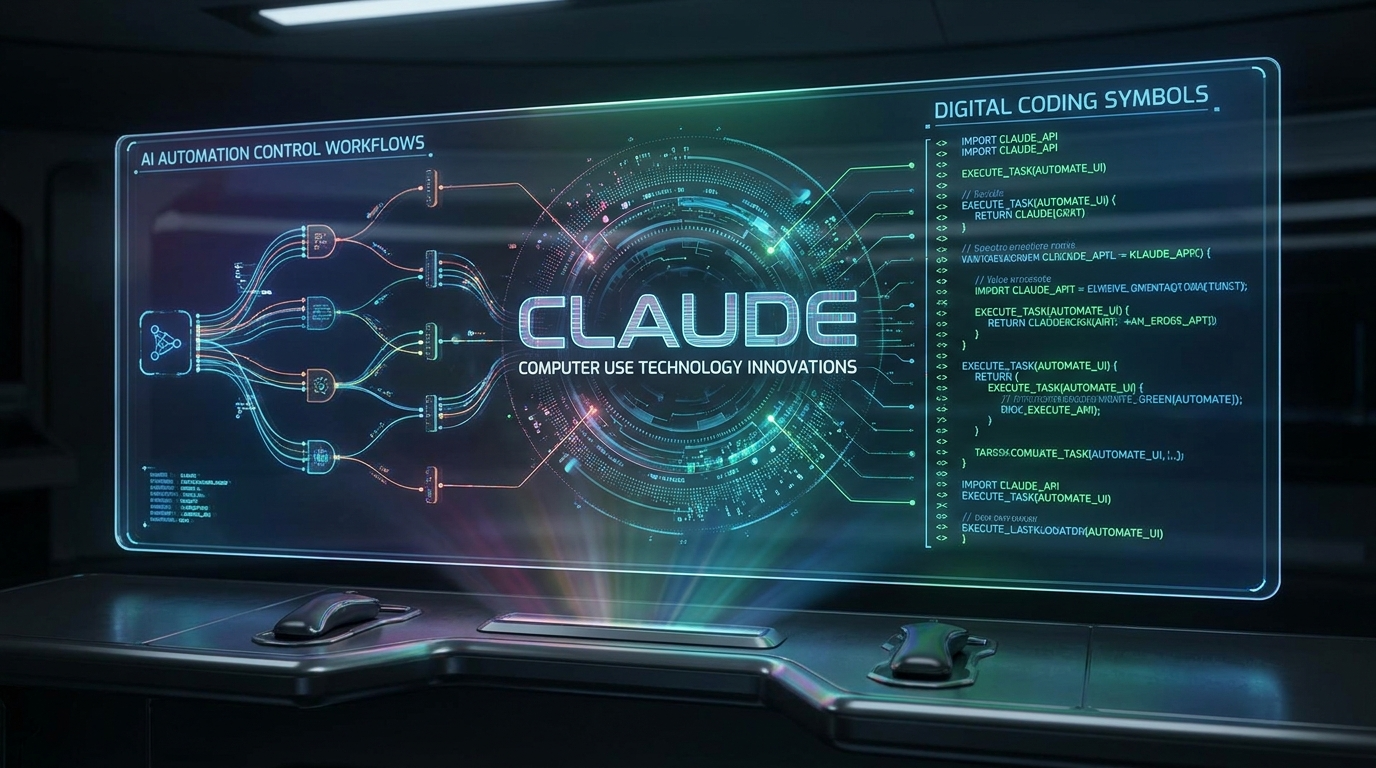
Claude Computer Use marks a significant leap in AI automation workflows, promising to unlock powerful capabilities for both developers and content creators. This technology’s integration with Model Context Protocol (MCP) enables unprecedented 100% AI-powered control of desktop environments, driving efficiency gains across SEO, content optimization, and software development.
Claude Computer Control technology operates by leveraging advanced AI agents that interact seamlessly with desktop applications through structured MCP commands. Unlike traditional automation tools that require manual scripting or partial AI assistance, Claude’s architecture allows full automation of complex workflows using natural language prompts combined with deterministic protocol controls. This fusion ensures precise execution across multi-step tasks, from data extraction and manipulation to content generation with contextual awareness.
The practical benefits of Claude Computer Use are extensive. SEO professionals can automate keyword research, content audits, and performance tracking with AI-driven workflows, drastically reducing manual labor. For example, by setting up Claude Code automation, users can schedule periodic SEO reports that analyze site metrics and generate actionable insights without human intervention. Content teams benefit from automated drafting and editing workflows, where AI agents autonomously produce and refine articles, improving speed and consistency.
In software development, Claude Computer Control workflows streamline routine coding tasks such as code review, testing, and deployment. Developers can leverage AI agents to write boilerplate code, identify bugs, and integrate changes, allowing human experts to focus on innovation rather than repetitive tasks. This aligns with current industry trends pushing toward AI augmentation within developer tools, a leap exemplified by major players like Microsoft integrating AI copilots into their product suites (Microsoft Copilot AI automation).
Claude’s differentiation lies in its holistic approach—combining robust Model Context Protocol integration with natural language AI agents to offer a flexible yet controlled automation platform. This bridges the gap between rigid scripted automation and fully adaptive AI systems, delivering consistent results without sacrificing customization or oversight.
Expanding on use cases, Claude Computer Use extends beyond SEO and development into content creation where nuanced understanding and contextual manipulation are crucial. For instance, integrating Claude workflows enables the generation of SEO-rich articles while maintaining readability and adherence to editorial guidelines. The ability to automate these processes is described in detail in tutorials such as advanced content optimization techniques on niche sites, highlighting real-world applicability.
Comparatively, competitors in the AI desktop control space often rely on hybrid models that provide partial AI assistance with significant manual configuration. Claude Computer Use’s claim of 100% AI-driven automation sets a new standard, supported by preliminary user testimonials praising the reduction in repetitive task times and improved workflow fluidity.
Looking ahead, the roadmap for Claude Computer Control involves expanded AI agent SDKs, enabling enterprises to customize and scale their automation strategies easily. This promises enhanced interoperability with existing corporate systems and broader adoption across industries needing scalable AI solutions.
Moreover, as AI breakthroughs continue, evidenced by research from leading institutions like UC San Diego identifying nine transformative advances powered by AI (AI breakthroughs at UCSD), systems like Claude stand to benefit from ongoing innovation in model efficiency, contextual comprehension, and autonomous operation.
For readers interested in practical applications beyond automation, Claude Computer Use can be complemented by knowledge in AI workflow integration and efficiency improvements detailed in resources such as AI-assisted workflow growth strategies. These methodologies emphasize building scalable, intelligent environments tailored to specific business needs.
As enterprises explore AI-driven desktop control, understanding the foundational mechanisms behind Claude’s success models—the seamless interaction of AI with desktop software controlled by MCP—will be critical for adoption and innovation. The educational context underpinning AI automation principles is also accessible through structured guides like the BBC’s clear explanations of automation and coding workflows (BBC automation and coding guide).
Claude Computer Use thus represents a pivotal advancement in AI automation and desktop control, positioning itself as a tool for future-ready professionals seeking to harness AI for enhanced productivity and insight generation. Its sophisticated blend of 100% AI-powered execution, protocol-based reliability, and natural language fluidity promises to redefine how automation workflows are conceived, implemented, and scaled across sectors.
In conclusion, Claude Computer Use not only delivers a powerful AI automation breakthrough but also establishes a foundation for ongoing innovation in AI-assisted workflows. As this technology matures and ecosystems expand with SDKs and enterprise solutions, it will likely become indispensable for SEO, content creation, and software development teams aiming to leverage AI meaningfully and sustainably.