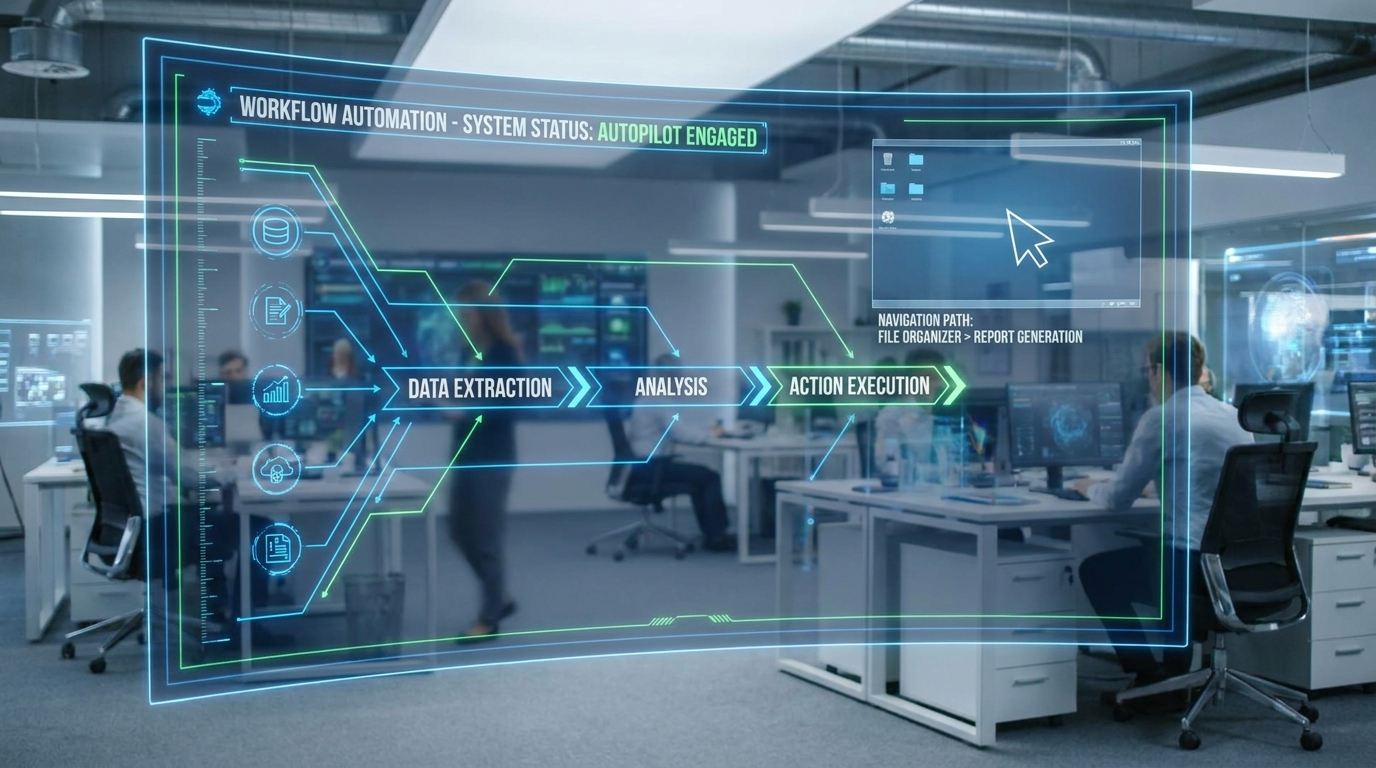
AI computer control technology is transforming automation by enabling unprecedented autonomous interaction with computer graphical user interfaces (GUIs). This breakthrough technology leverages artificial intelligence to perform complex tasks remotely and seamlessly, reshaping how businesses and individuals manage digital workflows and hardware control.
At its core, AI computer control technology integrates AI algorithms with computer systems to automate processes traditionally requiring human input. This includes everything from executing routine software commands to managing hardware components across diverse environments such as healthcare, manufacturing, and IT infrastructure. As interest grows in AI-powered workflow automation, this technology plays a pivotal role in unlocking efficiency gains and reducing human error.
A key feature of AI computer control technology is its ability to function as autonomous AI agents that interpret and interact with GUIs without direct human oversight. According to experts at Accelirate, autonomous agents can independently analyze data, make decisions, and perform tasks, bridging the gap between raw data and actionable outcomes. Such agents enable businesses to scale automation rapidly while maintaining high accuracy standards, a significant advancement from earlier, rule-based automation platforms.
Adoption of AI control capabilities spans various sectors. For instance, in healthcare, AI-driven automation platforms handle scheduling, patient data entry, and even assist in diagnostic processes by controlling software tools remotely. Manufacturing benefits from real-time quality control and equipment monitoring managed by these AI agents, enhancing predictive maintenance and reducing downtime. IT departments utilize AI technology to control PCs remotely, tailoring system updates, security protocols, and user assistance with minimal human intervention.
Implementation of AI computer control technology comes with challenges, notably security concerns. Protecting access credentials and ensuring AI agents operate within authorized boundaries require robust cybersecurity measures. Integration complexity is another hurdle, particularly in legacy systems not initially designed for AI interaction. Companies aiming to deploy these solutions must carefully assess compatibility and invest in gradual rollout strategies to mitigate risks.
A compelling case study is the use of autonomous AI agents in financial services, where AI systems execute trades or manage compliance workflows by interfacing directly with existing platforms. This capability highlights the practical efficacy of AI automation platforms and offers a model for other industries seeking to harness similar efficiencies.
For organizations interested in adopting AI computer control technology, a step-by-step guide is essential. Start with clearly defined automation goals, followed by a thorough evaluation of current workflows. Next, select AI tools tailored for computer hardware control and software automation that align with business scale and complexity. Finally, implement pilot projects with continuous monitoring and iterative improvements to ensure the technology meets operational demands.
Emerging trends point to deeper AI integration with edge computing and Internet of Things (IoT) devices, expanding the scope of AI computer use beyond conventional desktops to interconnected industrial environments. However, as Snowflake notes, governance frameworks will be critical to balance innovation with safety, particularly as autonomous AI agents gain decision-making authority in sensitive applications.
Within this technological landscape, comparison with competitors reveals varying strengths. Some platforms focus heavily on user-friendly interfaces and pre-built workflow templates, while others emphasize customizable AI models for niche hardware control scenarios. Claimed advantages of Claude AI control, for example, include advanced natural language processing and scalability, positioning it strongly among best AI tools for computer hardware control.
For readers seeking to deepen understanding of AI workflow automation, exploring innovative AI application strategies can provide valuable insights. Meanwhile, foundational knowledge on bio-inspired computational approaches is accessible via bio hacks in tech development, enriching perspectives on AI evolution. To appreciate the impact of AI across broader sectors, the article on key AI-driven process enhancements offers practical examples.
Further credibility arises from external research, such as Quantiphi’s comprehensive review on agentic AI applications in real-world settings. This resource details how autonomous AI agents are applied across industries, reinforcing the transformative potential of AI computer control technology.
Understanding the subtleties of autonomous agents, as explained by Accelirate’s insights into autonomous agent frameworks, helps contextualize the operational sophistication behind AI control solutions. These frameworks highlight the balance between automation freedom and governance.
Lastly, Snowflake’s analysis of autonomous AI agents fundamentals offers a forward-looking understanding of how these technologies will evolve, emphasizing security and ethical considerations essential for widespread adoption.
As AI computer control technology continues to evolve, it promises to revolutionize automation with increased reliability, adaptability, and reach. Organizations ready to embrace these tools must navigate integration complexities and security imperatives while leveraging detailed implementation strategies to unlock full benefits. The ongoing development of autonomous agents will likely redefine productivity standards and drive expansive adoption across critical industry verticals globally.