Nila: The Ancient Indigo Beauty Secret of Amazigh Women
Nila — derived from the Arabic word for indigo — is one of the most ancient and least-known beauty ingredients in the Amazigh (Berber) tradition. For centuries, women across North Africa and the Sahara have used this blue-black powder for skincare, hair treatment, kohl eyelining, and spiritual protection. In recent years, nila has begun to attract serious attention from the global natural beauty world.
What is Nila?
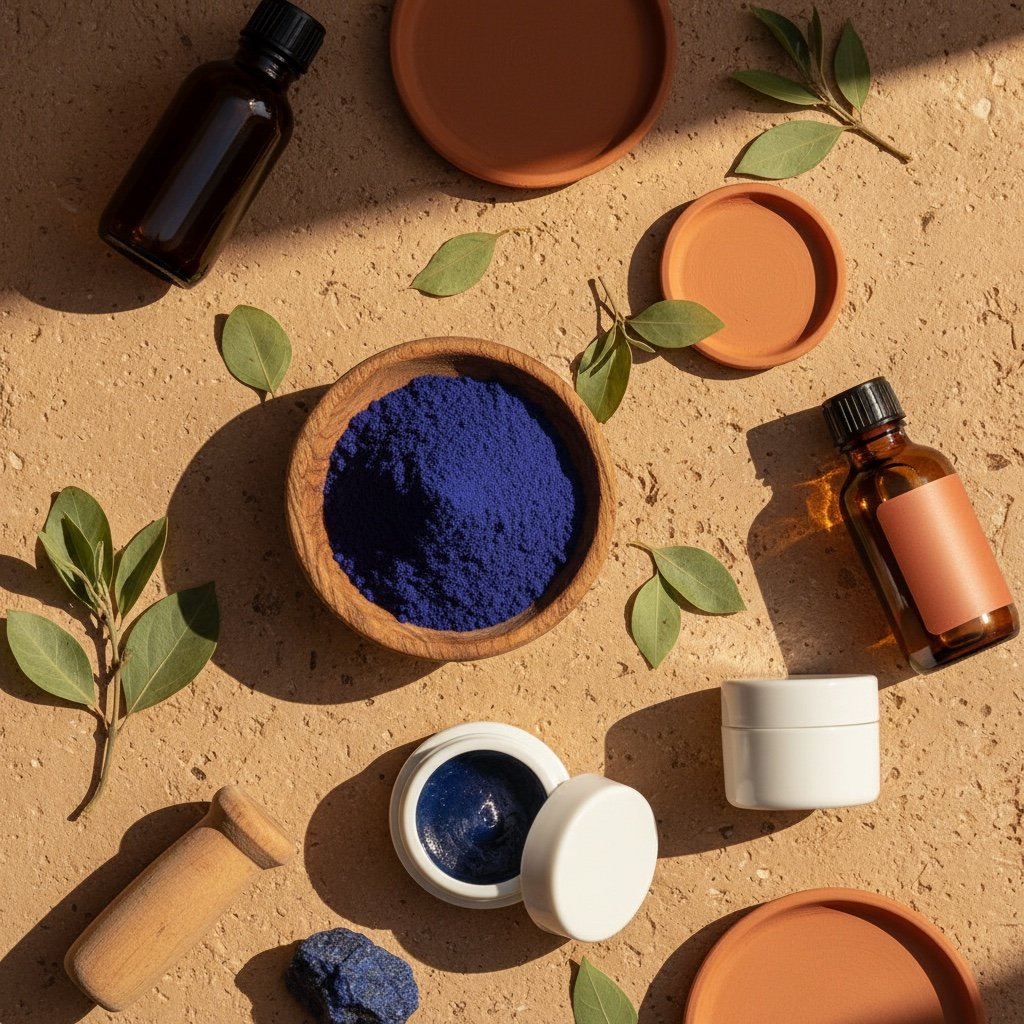
Nila is processed indigo — derived from the Indigofera tinctoria plant or related species. The leaves are fermented and processed into a deep blue-black powder or cake. Historically it was primarily used as a textile dye — indigo is one of the oldest dyes in the world. But in Amazigh communities, nila was integrated into beauty and health practices with remarkable sophistication. Authentic beauty-grade nila is derived from natural plant sources and processed without harsh chemicals.
Nila in Amazigh Culture
The Tuareg people of the Sahara — whose men famously wear indigo-dyed robes — have long incorporated nila into their daily lives. Indigo was believed to protect against the harsh desert sun, evil eye, and skin disease. Tuareg men’s skin was often visibly tinted blue from their robes — a quality so distinctive that they earned the name “Blue Men of the Sahara.” For Amazigh women, nila served as a hair treatment, a skin-toning mask, and a component in kohl for eye lining.
6 Skin Benefits of Nila
1. Antimicrobial and Antibacterial
Indigo compounds have demonstrated antimicrobial activity in multiple studies. Applied to skin, nila helps reduce surface bacteria — useful for acne-prone skin or as a targeted treatment for breakout areas.
2. Anti-inflammatory
Indirubin, one of the active compounds in natural indigo, has significant anti-inflammatory properties. Nila has traditionally been used to soothe skin irritations and rashes — and modern research into indigo for inflammatory skin conditions like psoriasis supports this traditional use.
3. Natural Toning and Brightening
Regular use of nila as a facial mask is said to even out skin tone and improve radiance. The astringent properties tighten pores and smooth skin texture over time.
4. UV-Protective Properties
The deep blue-black pigment of nila absorbs UV radiation. Traditional Amazigh and Tuareg communities have long understood that nila-treated skin is less susceptible to sun damage — and there is emerging scientific interest in indigo as a natural UV filter ingredient.
5. Hair Conditioning and Strengthening
Applied to hair as a mask, nila conditions the shaft, reduces frizz, adds depth to dark hair colour, and is believed to strengthen the hair root. In many Amazigh wedding traditions, the bride’s hair is treated with nila before the ceremony.
6. Ritual and Wellbeing Dimension
Traditional beauty cannot be separated from cultural meaning. For communities who have used nila for generations, the application ritual carries a sense of protection, blessing, and connection to ancestral practice — a psychological wellbeing dimension that purely clinical skincare cannot replicate.
How to Use Nila in Your Skincare Routine
As a Facial Mask
- Take a small pinch of nila powder — it is potent, so less is more
- Mix with rose water or plain water to form a smooth paste
- Apply to the face, avoiding the eye area
- Leave for 5–10 minutes — do not leave longer as nila can temporarily stain skin
- Rinse thoroughly with warm water
- Follow with argan oil to nourish and seal
In the Hammam Ritual
Nila can be incorporated into the Moroccan hammam ritual as a final mask step, applied after beldi soap cleansing and kessa exfoliation. The freshly exfoliated skin absorbs the active compounds more effectively.
As a Hair Treatment
- Mix nila powder with argan oil and rose water to create a thick paste
- Apply from roots to ends on damp hair
- Cover with a shower cap and leave for 20–30 minutes
- Rinse thoroughly and shampoo as normal
- Use once a month for conditioning and colour-deepening benefits
Important: Using Nila Safely
- Nila temporarily stains skin. It will leave a blue tint that fades within a few hours to a day. Always test on a small area first.
- Use sparingly. Start with a very small amount and increase with experience.
- Source quality matters. Ensure your nila is beauty-grade, not fabric-dye grade which may contain chemical fixatives.
- Avoid the eye area when using as a facial mask.
Frequently Asked Questions
Will nila permanently stain my skin?
No. The blue tint from nila fades within a few hours to a day. It does not permanently stain skin the way it stains fabric.
Can nila be used on all skin tones?
Yes. Nila is used by people of all skin tones across North Africa. The temporary tint varies in visibility but the skincare benefits are universal.
Is nila the same as indigo hair dye?
They share the same base plant, but beauty-grade nila is less processed and more gentle than commercial indigo hair dye formulated for long-lasting colour.
Can I use nila alongside other EARTD products?
Yes. Nila pairs perfectly with the full EARTD ritual: beldi soap to cleanse, kessa to exfoliate, nila mask for treatment, then argan oil to seal — a complete, all-natural Amazigh skincare ritual.