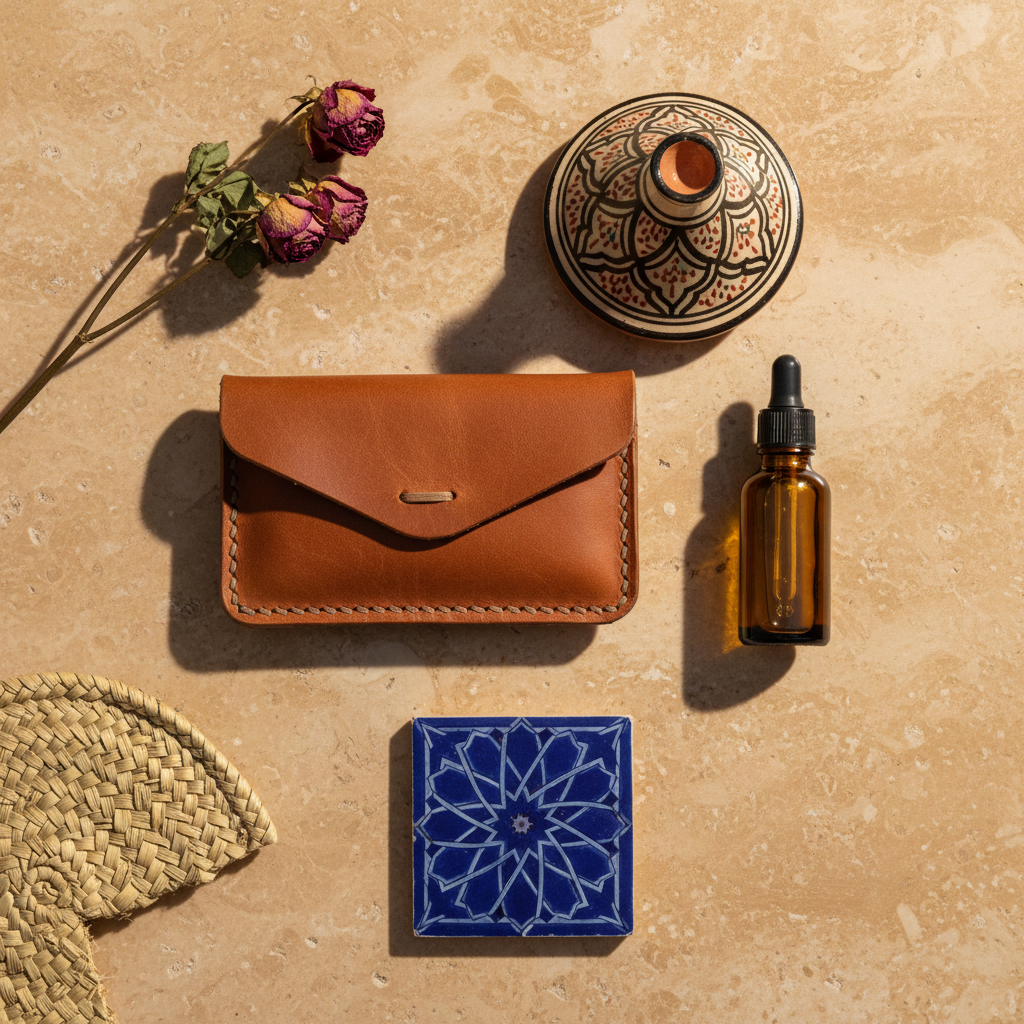
You can rent an apartment that feels like a riad without losing your deposit. Most “Moroccan home decor” advice assumes you own the walls, the floors, and the ceiling fixtures. You probably do not. So here are eight changes a renter can make that take a Saturday morning, cost under €200 in total, and turn a beige magnolia box into something that feels like Marrakech in October.
None of this requires a drill, a contractor, or your landlord’s permission. All of it is removable in 20 minutes if you move.
1. Layer two rugs — kilim over neutral base (€60–€90)
The single biggest move in Moroccan interiors is layered rugs. Start with the cheap, large, light-coloured rug you already own (or buy a flat jute). Lay a smaller hand-woven Berber kilim diagonally on top of it, off-centre. The colour contrast, the geometry, and the slight imperfection of a hand-woven piece carry the whole room.
Beni Ourain rugs are the famous ones — black-and-cream geometric, thick wool — but a real Beni starts at €600. For renters, look for Boucherouite (recycled fabric, vibrant colour, €50-90 for a runner) or a vintage Azilal (€80-120 small size). Avoid printed copies — they look wrong from day one.
2. Hang a brass lantern from existing ceiling hooks (€35–€60)
If your apartment has a centre ceiling light, swap the shade for a perforated brass lantern — Marrakech-style with cut-out star patterns. The shade lifts off most fittings with a quarter-turn. When you move, you put the original shade back in 60 seconds.
The shadows a real perforated brass lantern throws on the ceiling at night are the closest single thing to actually being in a riad. If you cannot swap the ceiling fixture, use a plug-in pendant cord and hang the lantern over a corner reading chair instead.
3. Stack pouf ottomans — leather and woven (€70–€120)
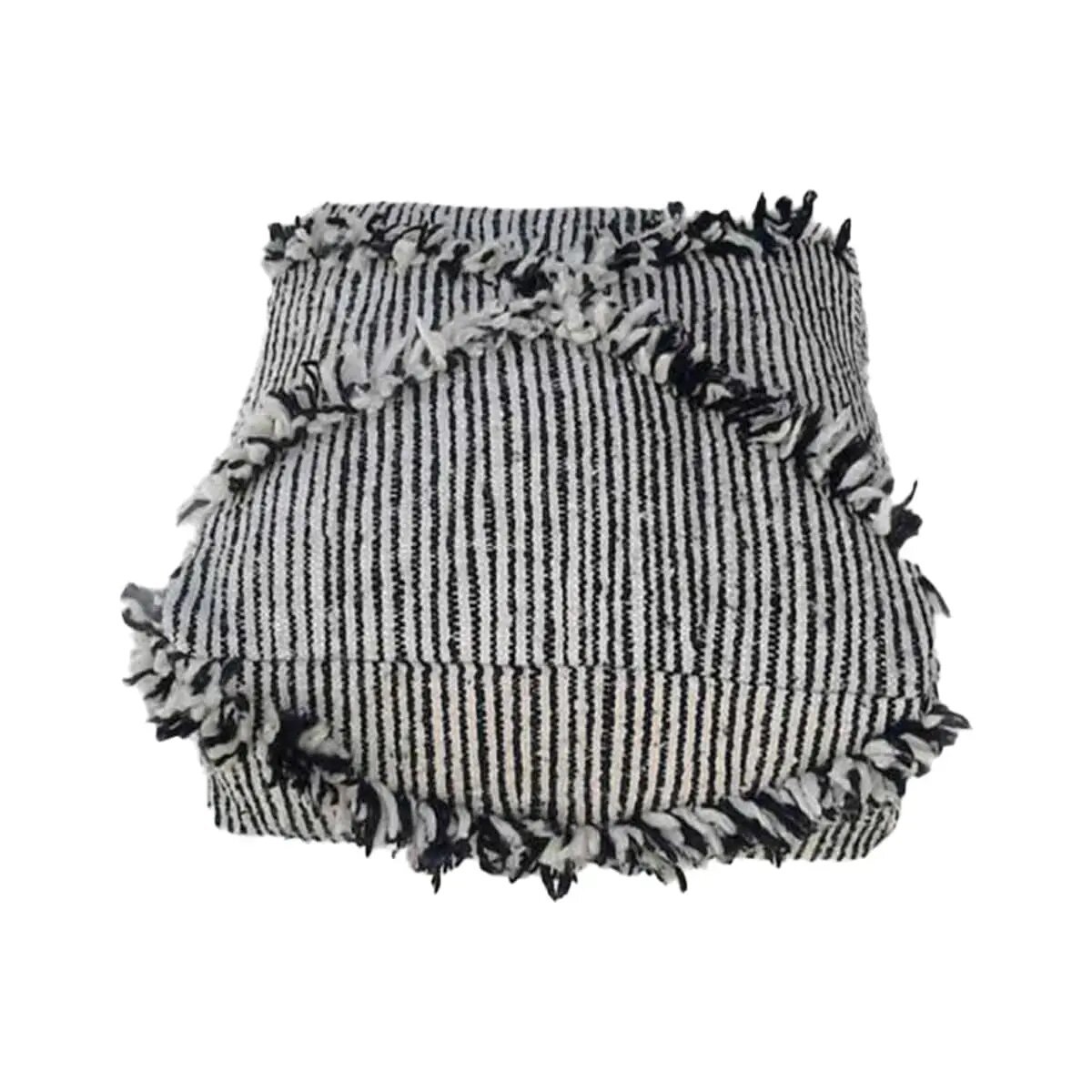
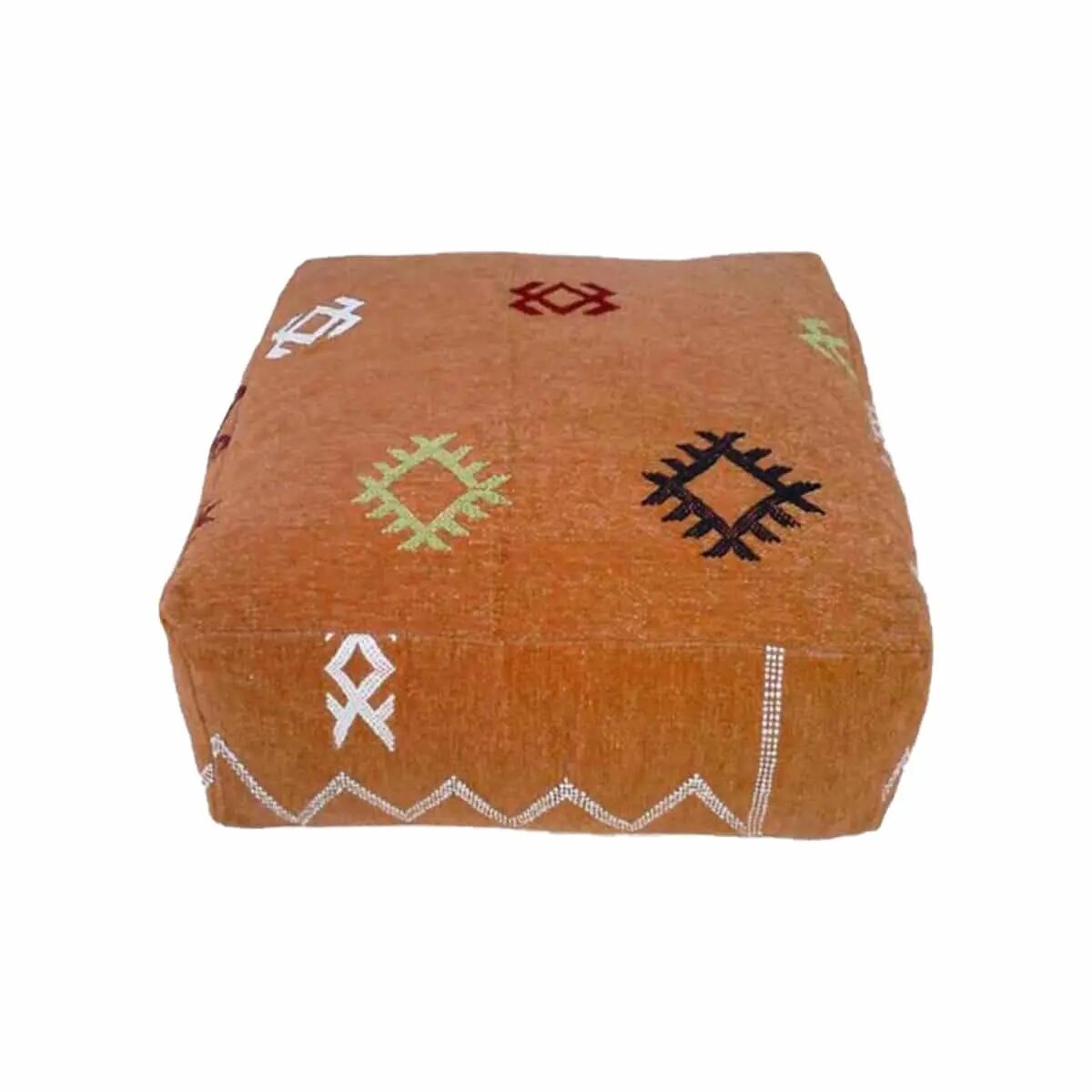
Moroccan leather poufs are a cliché because they work. Two poufs (one leather, one woven straw) in a corner, stacked, double as a side table, a footrest, or extra seating when friends arrive. They take up almost no visual space because they are low to the ground.
For renters, poufs are perfect: they need no installation, they are cheap, and a real hand-stitched leather pouf from a Fez tannery appreciates in character with use.
4. Brass tea-glass set on display (€18–€30)
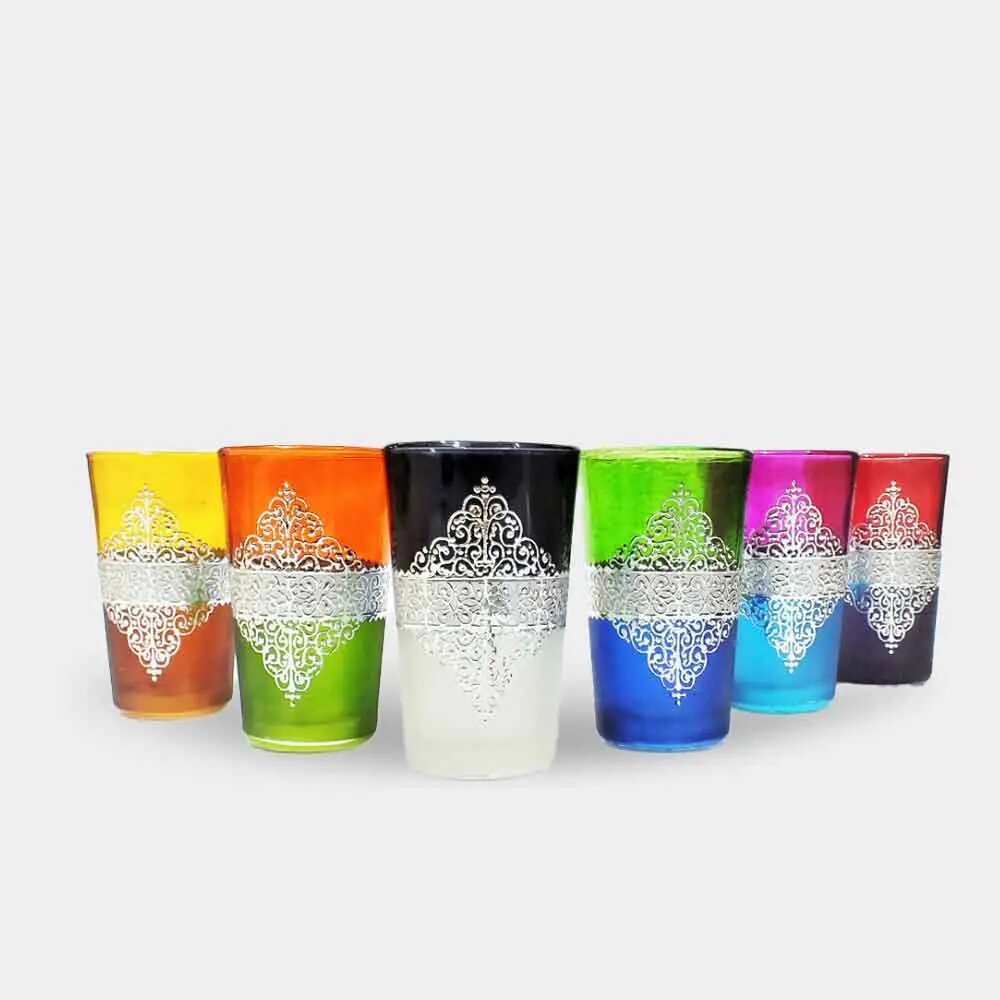
Six engraved Moroccan tea glasses on a small brass tray, sitting on a console or open shelf, is a permanent moment of warmth. They are inexpensive (€3-5 per glass, €15 for the tray) and they are useful — your friends will actually drink mint tea out of them.
Skip the matching teapot if you do not actually make tea. One unused decorative teapot is clutter. Six glasses on a tray that get used weekly is a tableau.
5. Zellige tile coasters and trivets (€20–€40)
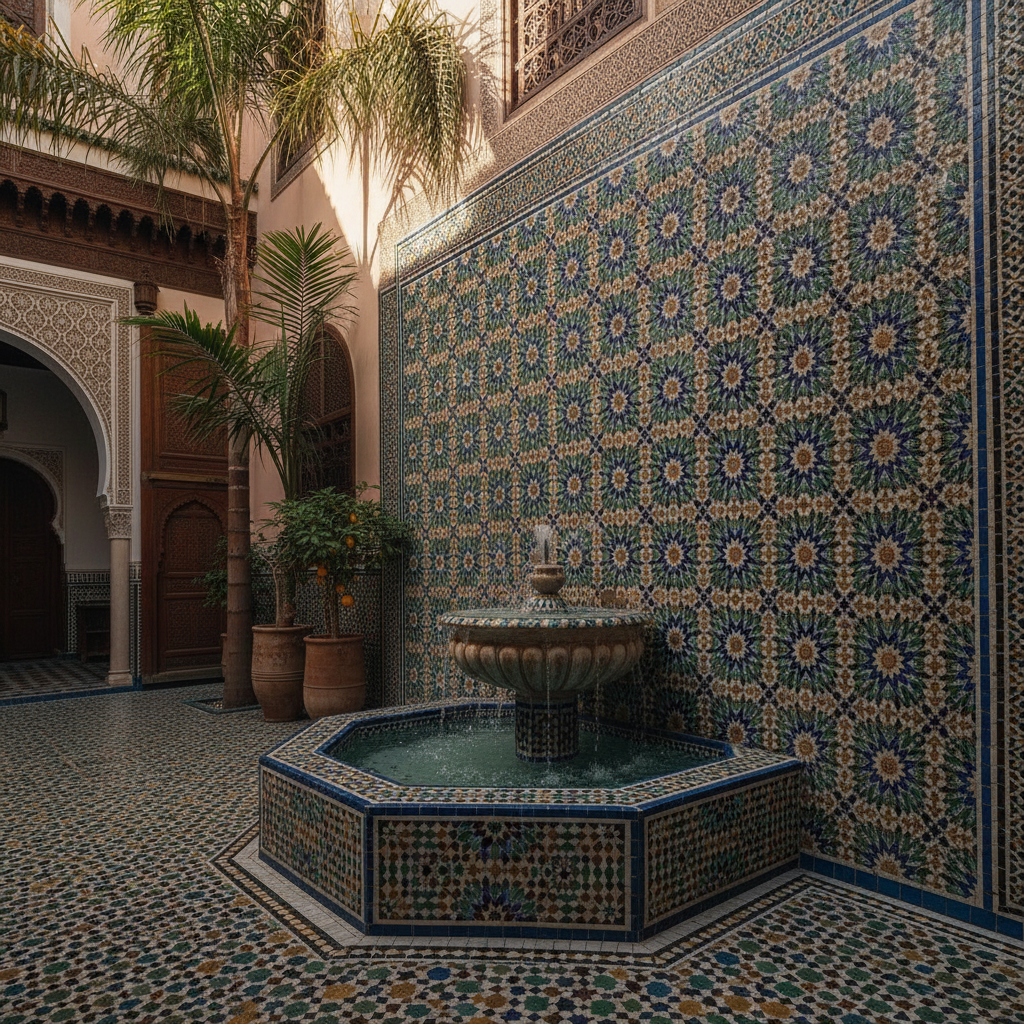
Real zellige (hand-cut mosaic tile) is the most iconic Moroccan surface — and impossible for renters to install. The renter-friendly trick: zellige coasters and trivets. Six single-tile coasters scattered across your coffee table and one larger trivet on the kitchen counter brings the geometry into the room at table level, where you actually see it.
Look for the natural-colour zellige (cream, ochre, terracotta) rather than the heavily-glazed turquoise sets — the natural finishes age better in a Western home.
6. Stick-up cane-webbing panel behind a sofa (€25–€45)
Cane webbing comes by the metre on rolls and costs around €15-25/m² for natural rattan. Stretch a single 1.5m × 0.5m panel onto a thin pine frame (€15 at any hardware store, assembled with picture-hanging staples — no tools) and lean it against the wall behind your sofa.
The texture of cane against a plain wall reads instantly as artisan-North-African and removes the dead air above your couch. Removable in seconds, no holes anywhere.
7. One large dried-flower arrangement in a hand-thrown vase (€30–€60)
Tall dried grasses (pampas, palmyra, or wheat) in a hand-thrown unglazed terracotta vase or amphora is the single highest-impact-per-euro move on this list. The asymmetric texture is the opposite of the symmetric mass-market vases your IKEA neighbours all own.
Look at Safi pottery for the vase — anything wheel-thrown with visible finger marks reads as one-of-one even when it is the cheapest version on the shelf.
8. Argan-oil and dried-rose hammam shelf in the bathroom (€20–€40)
Your bathroom is the easiest room in a rental to transform because nobody expects it to look interesting. A small floating shelf (Command-strip mounted — no drill) with three things on it: a small terracotta dish of dried rose petals, an amber-glass bottle of argan oil refilled from a larger bottle, and a folded raw cotton hammam towel.
It costs €20, it is deposit-safe, and it changes the bathroom’s smell every time you open the door. Combine with one of our at-home hammam guides and the shelf earns its keep on Sunday mornings.
The full €200 starter shopping list
| Item | Budget |
|---|---|
| Boucherouite or Azilal kilim runner | €70 |
| Perforated brass pendant lantern | €40 |
| Leather pouf + woven pouf | €90 |
| Six tea glasses + brass tray | €25 |
| Six zellige coasters + trivet | €30 |
| Cane webbing 0.5m × 1.5m + frame | €30 |
| Pampas + Safi vase | €40 |
| Bathroom hammam shelf set | €25 |
| Total | €350 |
That is the maximum spend if you pick the high end of every range. Pick three or four of the eight ideas and you stay well under €200.
Where to actually source the pieces
Three rules. Avoid printed-copy “Moroccan-style” decor from fast-furniture chains — they look wrong because they are pretending. Buy from cooperatives or marketplaces that name the artisan — every authentic piece should trace back to a city or a workshop. Expect small imperfections. They are the point.
Souk Atlas curates exactly this — direct from Fez tanners, Safi potters, and Marrakech weavers, with the artisan named on every product.
FAQ
Will my landlord notice?
None of the eight ideas leaves a mark, a hole, or a stain. Reverse them in an afternoon. The only physical change is the layered rug, which rolls up.
Do I need a colour scheme?
Stick to the four warm-neutral Moroccan staples: cream, ochre, terracotta, brass. Avoid bright turquoise or hot pink — they read as touristy.
Is this the same as Boho?
No. Boho is busy and Pinterest-curated. Moroccan interiors are heavy on surface, light on objects — three considered pieces beat ten random ones.
Where do I start if I only do one thing?
The kilim runner. It anchors everything else and is the only move that changes how the floor feels under bare feet — which is the test for whether a room is comfortable.
The bottom line
Renting is not a barrier to a beautiful, characterful home. Pick three of these eight changes, spend a Saturday morning on it, and your apartment will feel like a different city by Sunday night. None of it is permanent. All of it is portable to your next place.
Browse the Souk Atlas marketplace for the rugs, lanterns, poufs, and pottery — every piece sourced direct from a named Moroccan cooperative.