Msemen: How to Make Moroccan Square Pancakes (Step-by-Step)
- Yield
- makes 8 msemen
- Ingredients
- 8
- Steps
- 6
Ingredients
Tick items off as you go — the list stays put while you cook.
Method
- Combine flour, semolina, salt, sugar and yeast. Add warm water gradually, mixing until you have a soft, slightly sticky dough — softer than bread dough. Knead 8–10 minutes until smooth and elastic. The softness is what lets it stretch thin later, so resist adding too much flour.
- Divide into 8 equal balls. Coat each generously in the oil-butter mix, place on an oiled tray, cover, and rest 15–20 minutes. This relaxes the gluten so the dough stretches without tearing. Do not skip the rest — it's the difference between stretchy and stubborn.
- Oil your work surface well. Take one ball and, using flat palms, press and stretch it outward into a large, thin circle — thin enough to almost see through. Keep your hands and surface oiled so it glides. A few small holes are fine.
- Sprinkle the thin circle lightly with fine semolina (this keeps the layers separate). Then:Fold the left third over the centre. Fold the right third over that — you now have a tall rectangle. Sprinkle again with semolina. Fold the top third down and the bottom third up — you now have a square of many layers.Set aside and repeat with the rest. Let the folded squares rest 5 minutes.
- On the oiled surface, gently press each folded square outward to roughly double its size — about 15cm across. Keep it square-ish. Don't press so hard the layers merge; you want them to stay distinct.
- Heat a non-stick or cast-iron pan over medium heat. Cook each msemen 2–3 minutes per side, pressing down gently with a spatula, until deep golden with crisp edges. Brush with a little extra butter as they cook for richness. They should crackle when you press them.
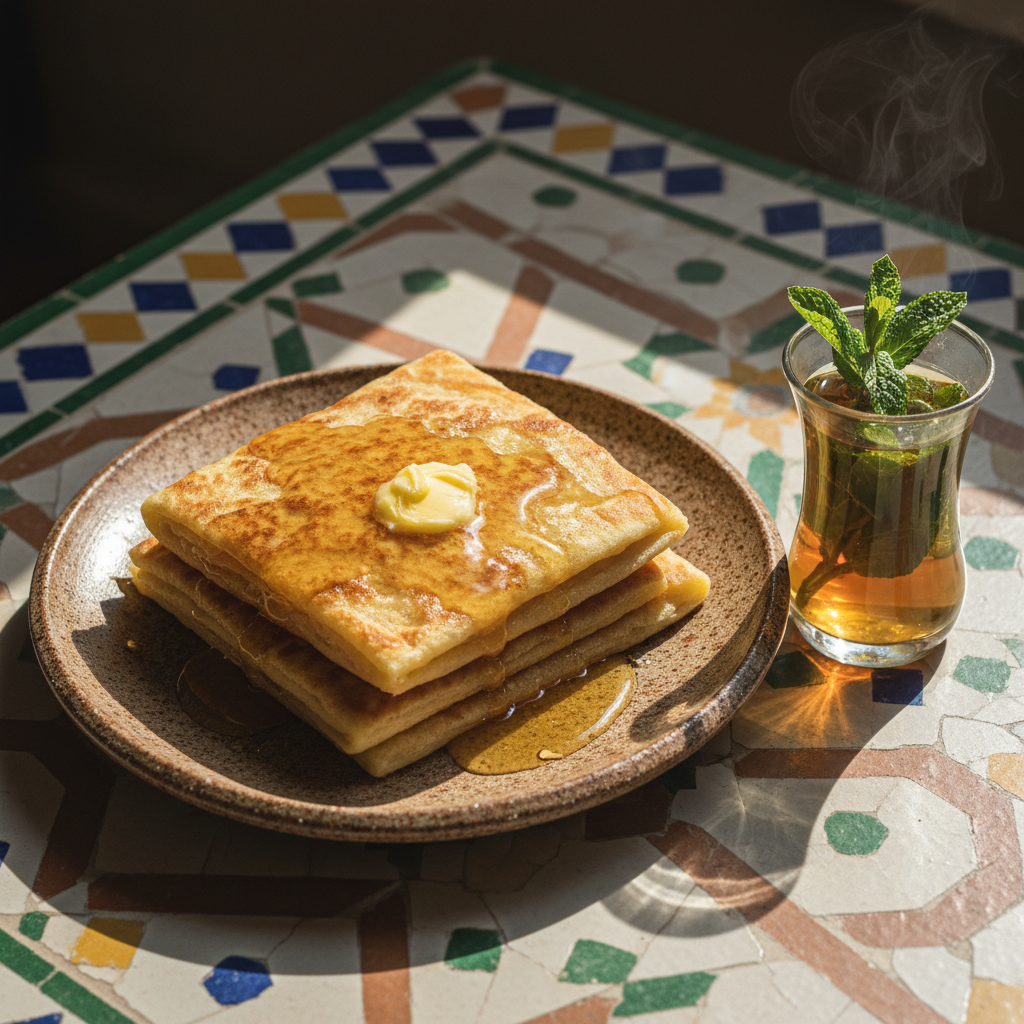
Walk through any Moroccan medina in the morning and you’ll smell them before you see them: msemen, the square, buttery, impossibly flaky flatbread pancakes cooked on a hot griddle and folded into dozens of paper-thin layers. Torn open and dipped in honey, or wrapped around cheese, they are the breakfast that defines a Moroccan morning.
They look complicated. They’re not. The whole trick is one folding technique — and once your hands learn it, you’ll make them faster than you can boil eggs. Here’s exactly how, with the details Western recipes always leave out.
What is msemen?
Msemen (also spelled msemmen or rghaif) is a laminated Moroccan flatbread made from a simple flour-and-semolina dough that’s stretched paper-thin, brushed with oil and butter, folded into a square, then pan-fried. The folding creates dozens of layers — the same principle as a croissant, but done in minutes on a countertop instead of hours in a fridge.
The result is crisp and golden on the outside, soft and layered inside, with a faint chew from the semolina. Sweet or savoury, breakfast or tea-time, they are Morocco’s most-loved griddle bread.
Ingredients (makes 8 msemen)
- 250g all-purpose flour
- 150g fine semolina (plus extra for dusting)
- 1 tsp salt
- 1 tsp sugar
- 1 tsp instant yeast (optional, for a slightly puffier result)
- Approx. 250ml warm water
- For folding: a bowl of neutral oil mixed with an equal amount of soft unsalted butter
- Extra fine semolina for dusting the work surface
The method
Step 1 — Make a soft dough
Combine flour, semolina, salt, sugar and yeast. Add warm water gradually, mixing until you have a soft, slightly sticky dough — softer than bread dough. Knead 8–10 minutes until smooth and elastic. The softness is what lets it stretch thin later, so resist adding too much flour.
Step 2 — Divide and rest
Divide into 8 equal balls. Coat each generously in the oil-butter mix, place on an oiled tray, cover, and rest 15–20 minutes. This relaxes the gluten so the dough stretches without tearing. Do not skip the rest — it’s the difference between stretchy and stubborn.
Step 3 — Stretch paper-thin
Oil your work surface well. Take one ball and, using flat palms, press and stretch it outward into a large, thin circle — thin enough to almost see through. Keep your hands and surface oiled so it glides. A few small holes are fine.
Step 4 — The fold (the whole secret)
Sprinkle the thin circle lightly with fine semolina (this keeps the layers separate). Then:
- Fold the left third over the centre.
- Fold the right third over that — you now have a tall rectangle.
- Sprinkle again with semolina.
- Fold the top third down and the bottom third up — you now have a square of many layers.
Set aside and repeat with the rest. Let the folded squares rest 5 minutes.
Step 5 — Stretch the square (gently)
On the oiled surface, gently press each folded square outward to roughly double its size — about 15cm across. Keep it square-ish. Don’t press so hard the layers merge; you want them to stay distinct.
Step 6 — Cook
Heat a non-stick or cast-iron pan over medium heat. Cook each msemen 2–3 minutes per side, pressing down gently with a spatula, until deep golden with crisp edges. Brush with a little extra butter as they cook for richness. They should crackle when you press them.
How Moroccans actually eat msemen
- With honey and melted butter — the classic. Tear, dip, repeat.
- With amlou — the Moroccan almond-argan-honey spread (like a nutty, luxurious Nutella).
- With soft cheese and jam — the savoury-sweet breakfast.
- Stuffed — some cooks add a spiced onion-and-tomato filling before folding, turning them into a light meal.
- Always with mint tea — never coffee. Msemen and Moroccan mint tea are a fixed pair.
Troubleshooting
- Dough tears when stretching? It needs more rest, or it’s too dry. Rest longer, keep everything oiled.
- Not flaky? You skipped the semolina between folds, or pressed too hard. The semolina keeps layers apart.
- Tough and dense? Too much flour, or overcooked on too-high heat. Keep the dough soft, the heat medium.
- Greasy? Too much oil in the folding mix and not enough butter. Balance them 50/50.
Can you make msemen ahead?
Yes. Cooked msemen freeze beautifully — stack with parchment between them, freeze in a bag, and reheat in a dry pan for 1–2 minutes per side. They come back almost as good as fresh. You can also refrigerate the folded (uncooked) squares overnight and cook them in the morning.
Msemen FAQ
What’s the difference between msemen and baghrir?
Baghrir is the “thousand-hole” spongy semolina pancake, made from a pourable batter. Msemen is the flaky, folded, laminated square. Different textures entirely — both Moroccan breakfast staples.
Can I make msemen without semolina?
You can use all flour, but semolina gives the signature slight chew and keeps the layers separate during folding. It’s worth buying — fine semolina is cheap and lasts forever.
Why are mine not square?
The square comes entirely from the folding in Step 4 — two folds one way, two folds the other. Round msemen means you rolled instead of folded.
Are msemen vegan?
The dough is vegan; the folding traditionally uses butter. Swap the butter for more oil or a plant butter and they’re fully vegan.
How long do they keep?
Best fresh and warm. Room temperature 1 day, fridge 3 days, freezer 2 months. Always reheat in a dry pan, never a microwave (it makes them rubbery).
The bottom line
Msemen feel like a bakery skill but they’re really a Sunday-morning habit — soft dough, a well-oiled counter, and one folding move repeated eight times. Make a batch, freeze half, and you’ll have Morocco’s best breakfast on hand whenever the craving hits.
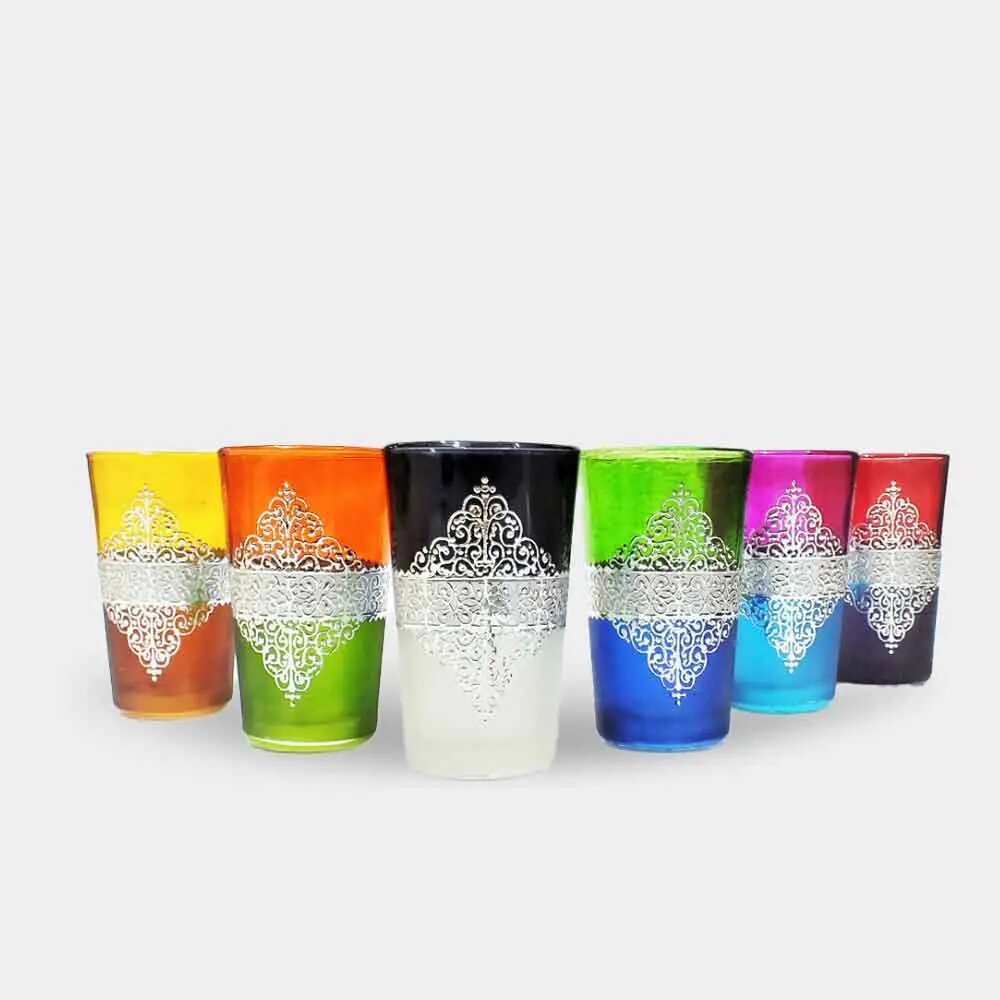
Serve them with mint tea and honey, and you’ve recreated a Moroccan morning. For the tea glasses, the honey, and the amlou to go with them, browse the Souk Atlas pantry.