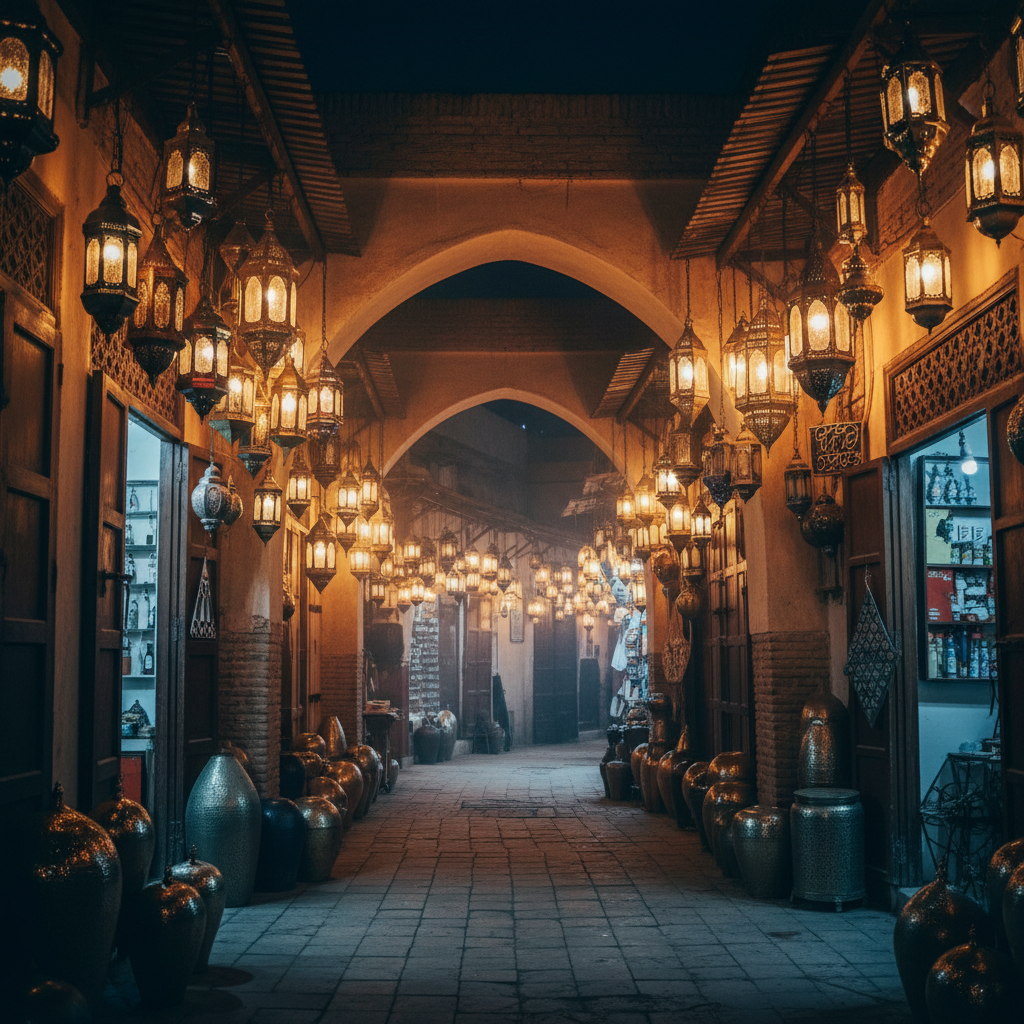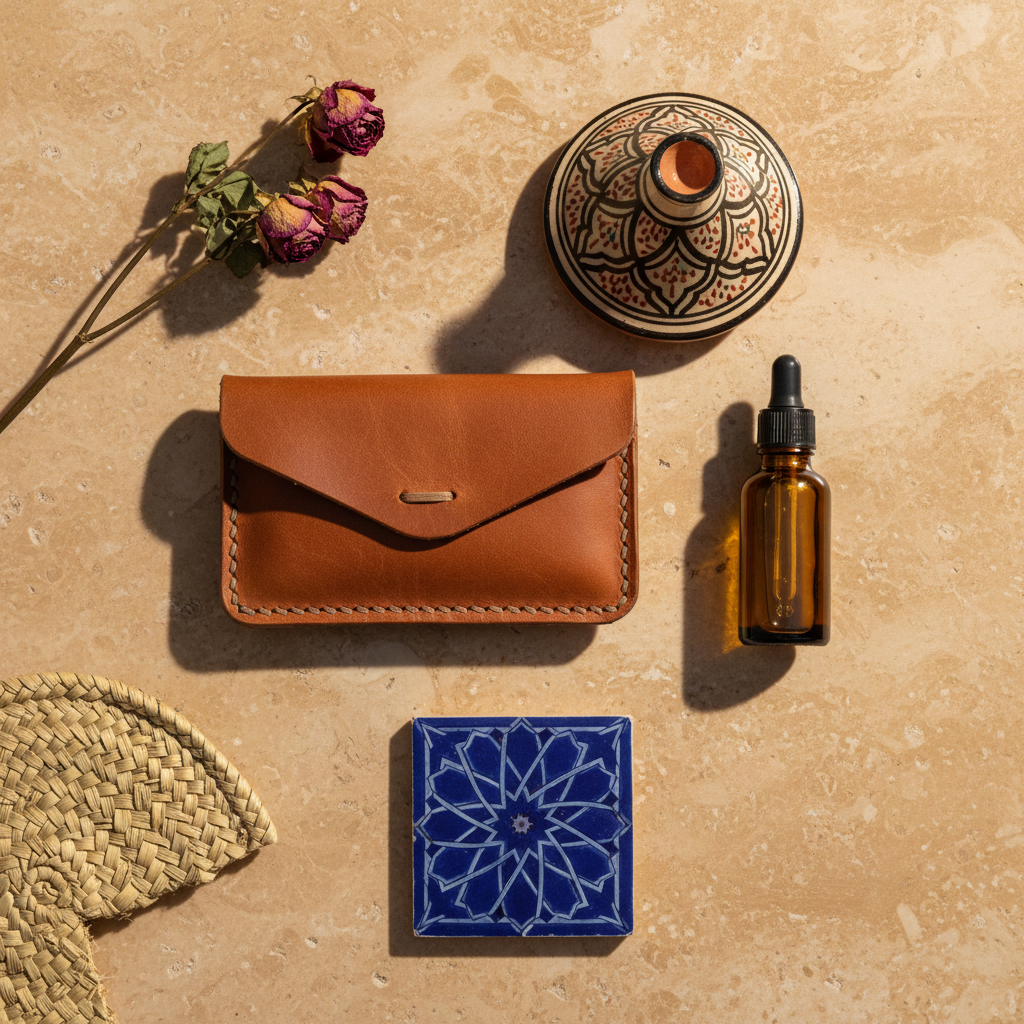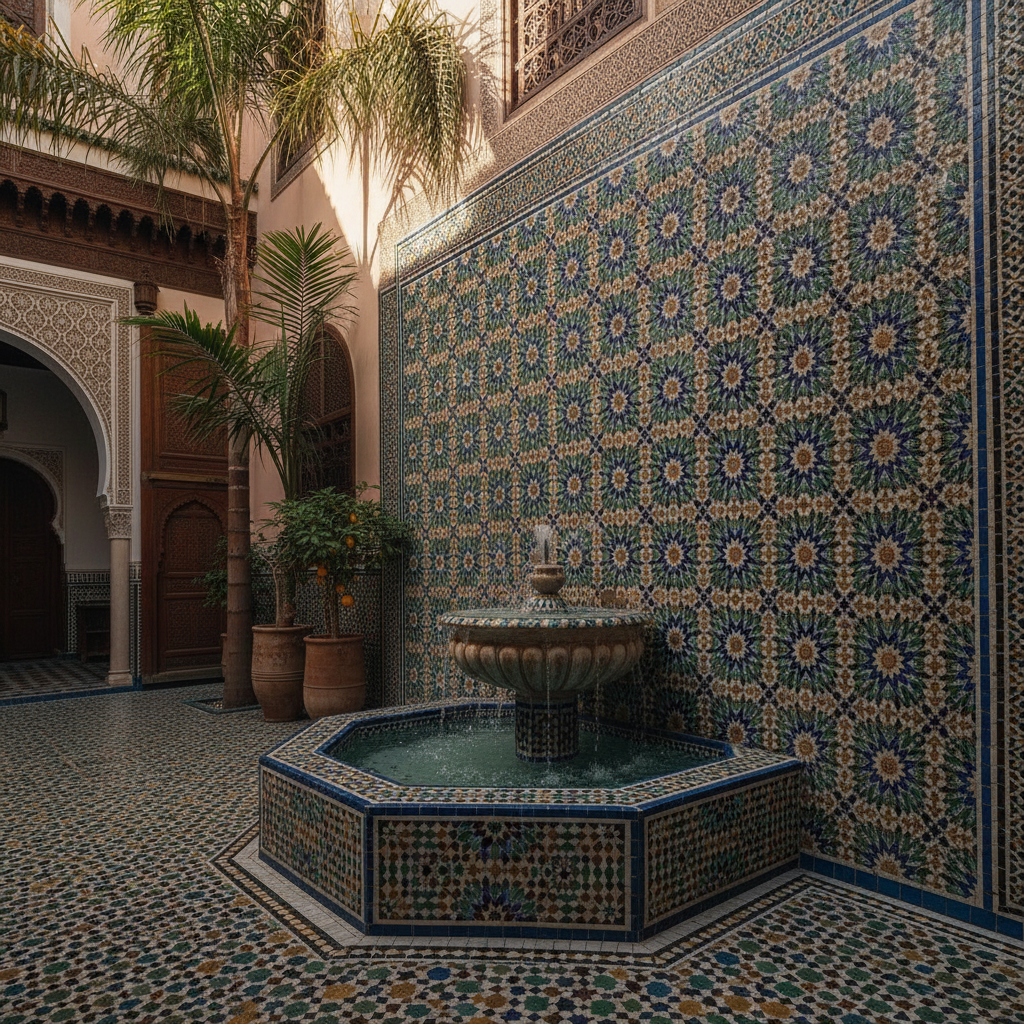
Every photograph of Morocco that makes you stop scrolling has it somewhere in the frame: zellige, the hand-cut, hand-glazed terracotta mosaic tile that covers the walls, floors, and fountains of every riad, mosque, and palace in the country. It’s the single most recognisable element of Moroccan design — and increasingly, the most coveted tile in Western kitchens and bathrooms.
Here’s what zellige actually is, how it’s made, what you’ll pay, and how to use it at home without turning your flat into a theme park.
What is zellige?
Zellige (also spelled zellij or zillij) is a form of mosaic tilework made from individually hand-cut pieces of glazed terracotta, set into geometric patterns. It originated in the Moroccan city of Fez in the 10th century and has been made essentially the same way ever since.
Each tile is:
- Made from natural clay dug from the plains around Fez
- Shaped, dried in the sun, and fired in a traditional kiln
- Hand-glazed one colour at a time
- Hand-cut into precise shapes by a master craftsman called a maalem, using a sharp hammer called a menqach
- Assembled face-down into patterns, then set in plaster
The result is a surface that shimmers and shifts in the light, because no two tiles are exactly alike. That irregularity — the slight variation in glaze, the tiny imperfections — is not a flaw. It’s the entire point, and it’s what machine-made “Moroccan-style” tile can never replicate.
Why zellige looks the way it does
The magic of zellige is the glaze. Because it’s applied and fired by hand, each tile has subtle variations in tone, tiny crackles (called crazing), pooling of colour at the edges, and a gentle uneven surface. Under natural light, a zellige wall never looks flat — it glimmers like water.
This is why designers pay a premium for real zellige over ceramic lookalikes: the imperfection reads as depth, craft, and age. A perfectly uniform tile reads as a bathroom in a chain hotel.
What does zellige cost?
Real, Moroccan-made zellige is a luxury material. As a rough guide:
- Authentic hand-cut zellige: €80–200+ per square metre, before shipping and installation
- Zellige-style “beldi” square tiles (hand-glazed but machine-cut edges): €40–100 per m²
- Ceramic “Moroccan-style” printed tile: €15–40 per m² — cheap, but flat and lifeless
Installation is also more involved than standard tile, because the irregular edges require a skilled hand. Budget for a tiler who has worked with zellige before.
How to use zellige at home
Kitchen backsplash (the most popular)
A zellige backsplash in a single colour — classic white, sage green, or deep blue — is the fastest way to bring Moroccan warmth into a modern kitchen. The glimmer catches the light above a worktop beautifully. One colour keeps it elegant; multiple colours can tip into busy.
Bathroom
Zellige loves water and steam — it was literally designed for hammams. A shower wall or vanity backsplash in zellige turns a plain bathroom into a spa. Green and terracotta tones are especially forgiving of water spotting.
Fireplace surround or niche
A small, high-impact application. Framing a fireplace or a wall niche in zellige gives you the material’s beauty without the cost of a whole room.
Renter-friendly: the small-scale route
If you can’t tile, you can still bring the geometry in. Zellige coasters, trivets, and small trays scatter the pattern across your table at eye level — deposit-safe and cheap. It’s the same trick that makes our renter’s guide to Moroccan decor work.
How to spot real zellige vs. fakes
- Look at the edges. Real zellige is hand-cut, so edges are slightly irregular and often bevelled. Machine tile has perfectly straight, uniform edges.
- Look at the glaze. Real zellige has tonal variation, crazing (fine crackles), and pooling. Printed tile has a flat, photographic evenness.
- Feel the surface. Hand-glazed tile has a gentle unevenness you can feel. Fakes are dead flat.
- Check the origin. True zellige is made in Morocco, overwhelmingly in and around Fez. “Moroccan-inspired” made in Europe or China is a copy.
- Check the price. If it’s under €30/m², it is not real hand-cut zellige. The labour alone costs more than that.
Zellige colours and what they mean
- White / natural — the most versatile, timeless, and popular in modern interiors
- Green — historically the colour of Islam and paradise; the classic Fez green
- Blue — associated with Chefchaouen and the Majorelle gardens; cooling and coastal
- Ochre / terracotta — the desert and Marrakech palette; warm and earthy
- Black — dramatic and modern, increasingly used in contemporary design
Zellige FAQ
Is zellige hard to clean?
The tiles themselves wipe clean easily. The grout lines, being irregular, need slightly more care — seal the grout and use a pH-neutral cleaner. Avoid harsh acids that can etch the glaze.
Can zellige go on the floor?
Traditionally yes — it covers riad floors across Morocco. For modern homes, confirm the specific tiles are rated for floor use, as some thinner decorative zellige is wall-only.
Does zellige crack?
The fine crackling (crazing) in the glaze is intentional and part of the look, not structural cracking. Properly installed, zellige is extremely durable — Moroccan palaces have kept theirs for centuries.
Is zellige waterproof?
Glazed zellige is water-resistant and ideal for kitchens, bathrooms, and even fountains. Unglazed terracotta versions need sealing.
Where does zellige come from?
Almost all authentic zellige is made in Fez, Morocco, where the clay and the craft tradition have existed for over a thousand years.
The bottom line
Zellige is expensive because it’s genuinely handmade, one hammered tile at a time, exactly as it was a thousand years ago. That’s also why it looks like nothing else. Whether you commit to a full backsplash or start with a few coasters on the coffee table, a little real zellige brings a warmth and depth into a home that no printed tile can fake.
For hand-glazed zellige pieces, trays, and coasters sourced from Fez workshops, browse the Souk Atlas artisan collection.